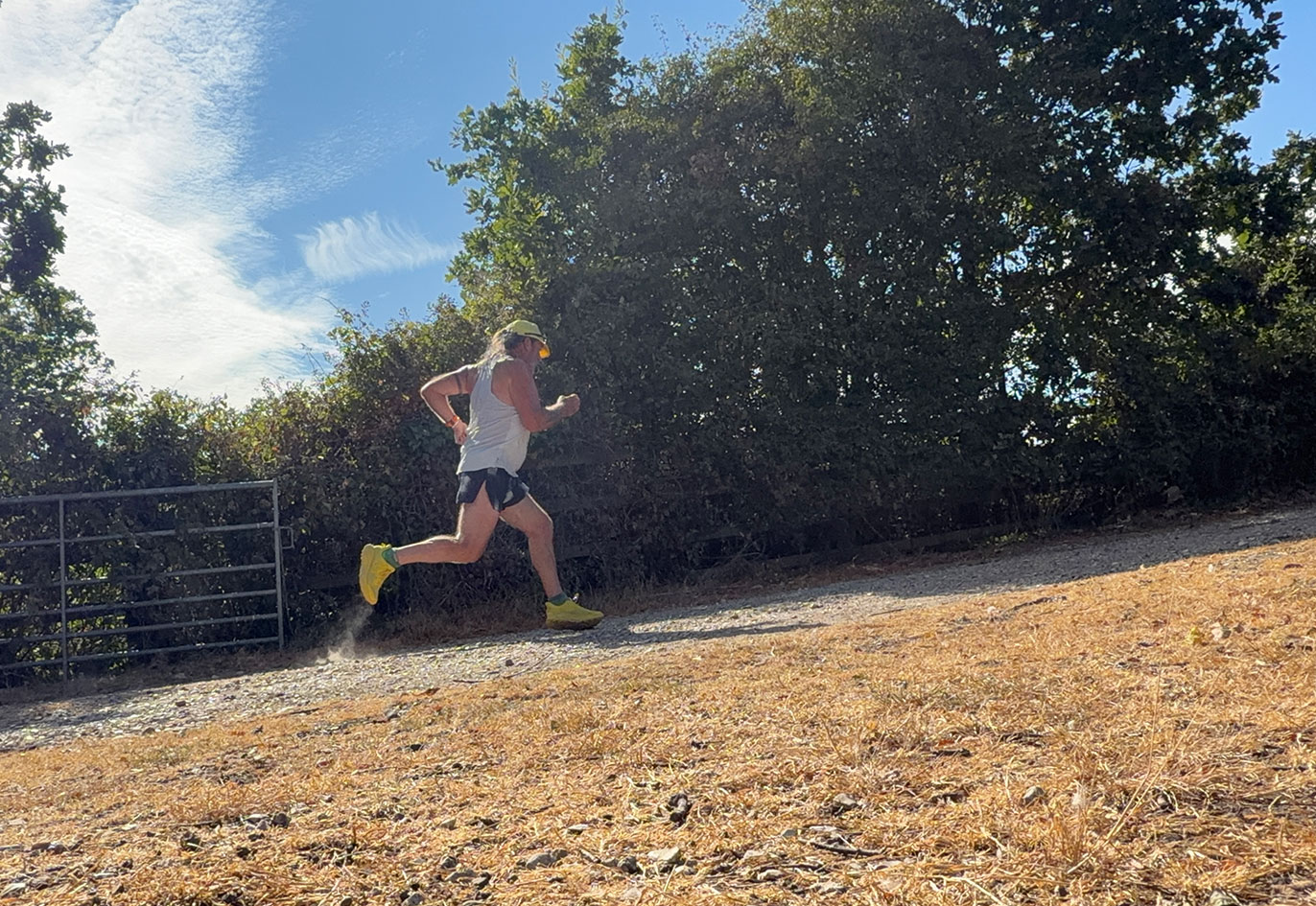
Why does anyone want to complete a 2000 day running streak? To be honest, I’m not really sure I can answer the question in simple terms. My ongoing streak spans the best part of 5½ years. It is more than a simple routine, separate from everything else in my life. I’ve had to live it, live with it, accept it as normal and absorb it into who I am. After all that, I’m still struggling to answer logically. I’m not sure if I’ve been emulating the pointless rock rolling of Sisyphus or the imposed labours of Heracles. If Sisyphus, am I doomed to continue? If Heracles, am I at an ending of sorts, and free?
There is much debate about whether adhering to such a streak is sensible. Fair enough, but the word ‘sensible’ tends to be relative when it comes to running beyond 5k. In marathon running it loses any semblance of normality. Once one reaches ultra marathon running, it becomes irrelevant as an adjective. Thus, I will deconstruct those 2000 days, explain the personal rules I adhere to, the key events and whether it has had a positive or negative impact on me. That way, I can come to terms with it myself.
My streak rules
There are generally accepted rules for a running streak, and I interpreted each with a little flexibility which I will set out below. These are my rules.
- Run a minimum of a mile a day. A day is from midnight to midnight, and the mile must be fully bracketed by these times. I have divided a mile run into two parts, on occasion. For instance, running to a shop, and back, to cover a mile, just pausing to pick up a few items, then returning home. However, this has never been two independent journeys with different objectives, and never less than half-a-mile at a time.
- Cover the ground at ‘effort’. This is important, as I always knew there would be times I would be unwell or struck by an injury. The ‘effort’ has to be balanced with health level. If fit and healthy, that may be a 10:00 mile or much quicker. Call that 80% standard effort. If unwell, or injured, that 80% effort remains the same, but the speed will drop. Thus a much slower mile will count if the energy expended is at 80%. At my slowest I utilise the ultra-shuffle – one foot in front of the other from A to B. An extreme example would be if one was on crutches and hopped a mile in 30 minutes. Would it count? Effort says yes. Purists would debate it. (Set your own rule.)
- Record every run. My streak is recorded in my training log. Every run. Every mile I’ve covered.
Why did I start?
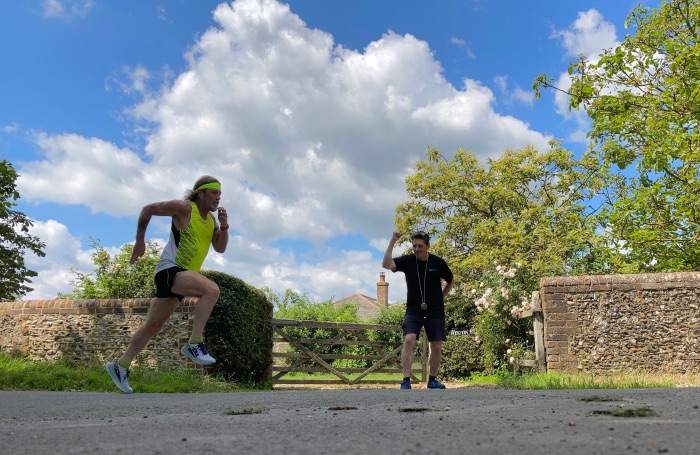
I started by accident on 27th December 2020. I was aiming to get to 1000 miles for that year. After missing a whole week earlier in the month due to work commitments, I was stuck on 958 miles – so close, but so far. On 26th December 2020 I had a rest day, and had decided not to bother trying to fit 42 miles into 6 days, as I was knackered. It bugged me. In the end I found the challenge was too great to resist. I ran a 6, 10, 10, 10 and 6 to get to exactly 1000. Then, I just kept going. In 2021, I started to work with my Personal Trainer, Martin Sorenson, as the subject for his MSc, and by July realised I’d not missed a day. Way back in 1984 I ran the whole year without a rest day, so thought I’d replicate it.
Why did I decide to keep it going?
After the anniversary year, then a full calendar year, I’d noticed a Facebook friend in Jersey, Dave Woodsford, was on the way to his target of 1000 days. By now I’d committed myself to ultramarathon running, and thought such a target would mesh with that odd discipline. So, by 2022 I committed myself to 1000 days. Thanks Dave, you were my inspiration. Upon reaching 1000 days, well, why not 2000? I could never find a reason not to run.
Psychologically, it gave me a constant positive. No matter what happened in my life, I could always have some Me time, even if that was just 10 minutes. At moments when giving up would have been easy, it made me get up, get out and be alive. Eventually, not going for a run became unthinkable. It still is. You see, the streak became self-perpetuating. Now, running each day is a natural way of life for me. And that’s the key. One has to believe running each and every day is nothing special. It’s normal. That way, you’ve not got to justify your reasons. As I write I’m less than three months from my 70th birthday. I honestly believe that my choice has given me the best chance of living a longer, healthier, more fulfilling life.
How hard can things get?
This is a simple question, but the answer is multifaceted. Going for a run is easy enough. To do so every day, for just short of 5½ years, encompasses a lot of life. One does many things over such a time span, and a lot of unplanned events occur, so going for a run often becomes something to fit in where it causes the least disruption. From the outside, life-changing events make a run seem unimportant and almost irresponsible. Context and thought come to bear. Decisions have to be carefully considered. At times, going for a run to keep a streak going can upset those closest to you, with good reason. Thus, diplomacy and understanding should take precedent over stubborn adherence. Quite simply, make sure you are running for the right reasons. Below I’ll cover each valid reason to not run, with an overview of why I did and do.
Travel
Any journey takes planning. Whether a weekend away, or a holiday in the UK or to foreign parts, continuing a streak can be difficult. It’s easy enough to run when you get to your destination, but the journey to get there may take a few days.
If travelling by car, I run before we leave. If the drive is over a couple of days, I may run once we reach our overnight accommodation, then, perhaps, early the next morning before breakfast. Sometimes, I have run part way through a drive. I’ve stopped and run in Glen Etive, through Grantown-on-Spey on a dark evening with heavy frost and across the rainswept Flows of Sutherland.
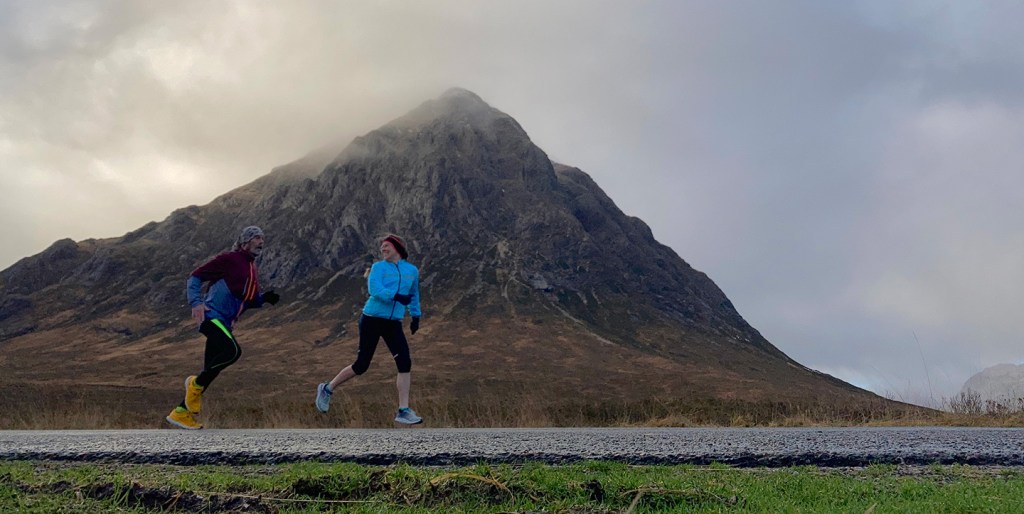
If flying it depends on flight times. I can run early, before the drive to the airport, or after landing, upon arrival in my destination. I’ve even run mid travel, along the quayside of Skiathos whilst waiting for a ferry. I have yet to do a long haul flight during my streak – that would be interesting…
The biggest problem is overcoming the natural “Why bother?” feeling. Especially after a hard day. This is commitment to the streak, with no impact on others.
Illness
This is a big issue. One that needs careful thought. My logic revolves around a run being a natural part of living each day. Even when unwell, or injured, you still have to dress, go to the loo, shower, eat, walk etc. To me, a run is just one more thing. A lot of people think running is bad, or unnatural in a funny stretch of logic. So, there is the tendency to brand an unwell person going for an easy jog as stupid, reckless or thoughtless. I think that I have a natural, built-in safetyometer. I don’t think I’d exercise if my heart, lungs or brain could be harmed. So far, I’ve got it right, but there have been a few occasions where I’ve had second thoughts.
The worst-case scenario I had to endure was in a hotel with my wife during a family emergency. Before the journey there, I developed severe prostatitis – a nasty bacterial infection of the prostate. I had been prescribed the wrong antibiotics, and suffered dreadfully until the correct medication was identified, and sourced near the hotel in a local pharmacy. On the worst day, my wife was beside herself, as I’d spent the night trying to urinate many many times. A couple of times I was crawling on the floor in discomfort. It was a case of drinking lots of water, and trying to flush my system through a reduced, swollen exit. The following day I announced I was running a mile. My wonderful Passepartout almost locked me in, but gave in if I followed her. So, I got changed and could barely keep up as she walked and I shuffled behind her to cover a mile in 21 minutes. Trust me, a 4 minute mile is easier. It was 100% effort. Before you judge, at the end I felt better in myself as my body relaxed and I felt human. From then the correct antibiotics started to work and my runs were less stressful.
With other illnesses, the safetyometer has to be fully operational. In 2016, when I was suffering burnout in my job, I contracted 9 viruses in a row. I was constantly ill. I was not on a running streak, then. The pressure of unfair workload and negative management can really hit one’s health very hard. The upshot of that is now, even though I’m through that part of my life, any virus tends to knock the legs out from under me. I always lose my sense of smell, and always feel dreadful. Yet, I still run. But, I run very, very easily. And never more than that set mile. If ever my heart and lungs are affected, or if I’m bed-bound, I would not run. I have yet to get to that point.
I have, in the last 5½ years, had a few minor surgeries. Each time, I have run early, had the procedure, then jogged late the following day. This way I managed to stay on the sensible side of keeping pressure off stitches.
Injury
In 2021, the first full calendar year of the streak, I had a fabulous time. At 65 years of age, I ran a 25:43 5k, winning my age group, ran a 4:30 marathon, and a 5:18 50k, in the middle of heavy training. The Covid pandemic ruined any hopes of a summer ultra, but various lockdowns gave me focus on core work and long, people-free trail runs. By the autumn of the year, I’d noticed my right leg would occasionally give way. And my right Achilles was tight. After a few months lighter training, I ran a very good autumn 50k in 5:54. At 16 miles, my leg gave way, and I fell, rolling acrobatically to a stand without injury, then in the last few miles my right calf cramped horribly. I lost at least 20 minutes. I saw my physio for a few visits, and spent the end of 2021 exercising my right leg. It felt better.
2022 started with me focussing on the Race to the King 100k. Whilst running a ‘training’ 4:15 marathon, my right leg started going numb again after 18 miles. It cost me 5 minutes, I’m sure. I decided to ignore it as I felt so fit.
A short time later, I set out on a hilly 32 mile training run. I had a support team – my wife and Martin my Personal Trainer and good pal. On a warm day I was running well but my right calf would cramp randomly, and the whole leg would decide not to work for a split second. I reached our 14 mile rendezvous, changed shoes for the big hills and trotted off to scale the South Downs. I struggled up the various climbs. My leg was not cooperating. Down to our second rendezvous at 19 miles I was scratching my head. I could clip along at sub-9 minute miles on descents, but my leg was not liking the climbs. I felt great, full of running and well hydrated. After more climbs, my leg started to give way on descents – very scary as I had no control. So, I plodded to the end, feeling very fit, but knowing I had an issue. I dropped out of the 100k as my leg was getting worse.
This time I took my physio’s advice seriously. The injury was worse than I’d imagined, and it led to low mileage from late 2022, to early 2025. The streak continued, but the injury kept my training low key. 2025 looked much better. Finally, I was free of pain. Cured! I completed a very hard 50k in February, 7:40 being slower than I’d hoped, but it was a monstrous route. However, my legs were alright. I’d entered the Race to the King again, and by May, was ready. Then, a death in the family meant I had to drop out again.
I’d lost heart. In the autumn I knelt awkwardly and hurt my left knee. More physio. Then as that got better, I fell during a trail run and hurt my right knee! In early 2026, I’d decided to not train much until I was properly free of injury. I’d also taken the pressure off by deciding not to run any ultras until after my 70th birthday in September. And that’s where I am.
My physio, Ricky Lidbetter, told me I could continue running, but low mileage and mainly on roads. So, the streak survived. Ricky eventually discovered the cause was an old back injury from when I was 19. Finally, after months of work, the pain was reduced, then gone. My knees were fixed.
The lesson – if you know you’re injured, it won’t go away – see a physio and do as you’re told. However, running may not necessarily have to stop. It’s a personal choice that must be made with the help of an honest expert. Ricky is one of the best.
Impossible moments
For me, 5½ years of running every day, and counting, remains a way of life. This is where context comes in. Unless one understands that, a run can seem superfluous when serious issues occur. I have found that my mindset is often at odds with the preconceived perceptions of others. I’ll give you a fictitious scenario.
You find out that your beloved grandfather has been taken to hospital with a serious illness. You have to travel, with your wife, across the country to see him, to make sure he knows you love him, and to show you care. It’s normal. You arrive at your hotel, and you both join your sister and her husband in the bar. Everyone is upset. Your brother in-law decides to get a round of drinks in, as we’ve all had a shock. You plan to see granddad the next day – he is stable. Grandma and your parents are with him. You ask for a soft drink as you want to run before dinner.
“How can you think of running, at a time like this?” Asks brother-in-law.
Your sister is weeping quietly, your wife comforting her.
“Maybe you should give it a miss, today,” suggests your wife.
It’s a tough position to be in. What would you do? This is where context comes in. I personally would not mention a run. I’d just do it later. Justifying a soft drink is unnecessary. It doesn’t matter if categorising a run as a selfish act is illogical, one has to realise it can be the focus for upset. It’s pointless saying it’s no different than a walk around the block. In such circumstances, it’s best to remember your run is just what you do. It’s not necessary to justify it. Just don’t mention it.
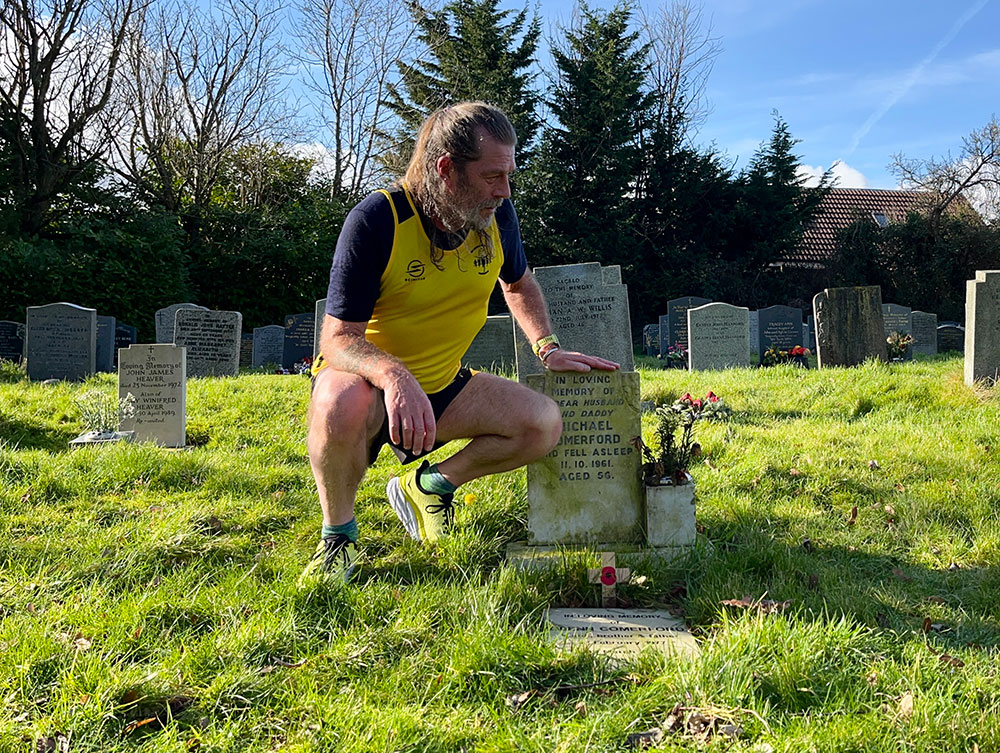
My son died in 2024. I did not have to justify myself to anyone. I ran to clear my head. I ran to weep and feel the effort of living. I ran because staying still hurt too much. This was my impossible moment. The streak did not exist – running did. I ran because sitting around gave grief too much weight. I regret nothing. I still run when I get sad. It is my time to let grief become energy to burn up. I run to his grave to say “hello”. I run back knowing I still love him.
You’ll never stop people judging you. It’s human nature. I’ve learned to be kinder. I am fortunate as people see me as the chap who runs. I’m accepted. I am convinced if you are kind and full of love, you use less energy and life becomes brighter. Running is my meditation. It burns my negative energy.
I hope this makes sense. Ultimately, you have to be at peace with yourself. Grief shouldn’t stop you doing the things that make you healthy and happy. I’ll leave this section with a quote from Benedick in Much Ado About Nothing: Act 3, Scene 2:
“Well, every one can master a grief but he that has it.”
No one should take away your own way of coping.
The negatives
Running every day is not easy. If it was, it wouldn’t be worth doing. Yet, to give an honest overview, I must put down the negative aspects. The bulk of these are the inconveniences of slotting in a run as covered earlier. You will clash with people in your life, but always remember to be kind. Most of the time they care about you, or the effect it has on you. This is especially so as I near my 70th birthday. I’ve got to the point of saying, “I never get home feeling worse.” That simple phrase is true. Others closest to me know that.
There are times when I’m ill that I know I will feel the symptoms of my ailment. I once had food poisoning in Greece and was travelling home. Finding a 15 minute gap to run, between explosive bouts of Montezuma’s revenge, was tricky. You will feel bloody awful, but will know when you’re getting better. Just never trust that tiny fartlette…
There are no real negatives, for me, just occasional challenges.
The positives
Whereas the negatives are centred upon inconvenience, the positives are manifold. The following are from my own experiences and reflect my own mindset.
First, you maintain a base level of fitness and mental strength. Even that one mile is better than no run. Getting out there, even when every fibre of your being is trying to make you sit in a comfy chair, avoids the feeling of giving up, and enhances the feeling of achievement. Some days that mental rejection of running is extreme. Beating it will beat giving in. You will see an excuse for what it is, justification for not doing something positive. This gives you the edge in other health drives. Giving up booze for a few months or forever, switching to a healthy diet, or reducing work stress can be hard, but necessary. If you have the built in stubbornness to run every day, that same strength of mind will get you through.
Second, you will have a barometer of how you are, physically and mentally. You will know when you’re getting unwell long before most. It prepares you. Okay, jogging a mile if unwell will magnify the symptoms, but will also show when you are recovering. I am stronger for it. I know Me much better than ever. Mentally we can become exhausted, overwrought and stressed. A run will help you think, relax and focus on the now.
Thirdly, it tells you when things in your diet are not right. You can feel yourself getting heftier. You can feel if boozing is starting to get out of hand. You can feel your age creeping up, to borrow a metaphor. You can feel the breath of the Reaper Man, to use my own. A running streak will get you to many crossroads, and what you put into your body will be one of them. I get to this point sometimes. I reflect, I debate, but the run and how I feel whilst running wins. I adjust and keep on the healthy track.
Fourth, it expands one’s mind. That is a bold claim, but that is how it is for me. It extracts me from the virtual world. Right now, everyone in the West, if not the whole WiFi linked world, seem to be plugged into a smartphone. To cut to the nub, I see there is a new, insidious collective stupidity afflicting Homo sapiens. The real world and screen-dominated, virtual world have become mixed. Populism thrives in this environment. It allows personal biases to be supported, emboldened and expressed, openly. Complete lies and fiction are accepted as they tickle that hidden bias within. Racism, xenophobia, stereotyping of the worst kind is now an undercurrent throughout our lives. Bent politicians are lauded if they say what a person’s biases need in order to surface. Whatever happened to make the voices of hatred become acceptable? Well, I’m still content to call them all buffoons. The noise can be relentless. If you unplug your head and run, you’re free. No earbuds for me, they just isolate you from the natural world. The calm I get from a run gives me time to think things through. Peace and kindness is all that is necessary. I’m not sure what that makes me. I’m an atheist because I think. My mind will not let politics and religion, with all their open corruption and madness, be swayed from critical thinking. Running has given me my free mind.
Last, in a far from comprehensive list, is living. At 40 or 50, the common ailments of getting older may have yet to make themselves known. But they will, unless you take care of yourself. As time passes, our past catches up with us – literally. Life is not short, it is the longest thing we will ever do. It is the most personal journey we will take, too. To make this a successful event, we must keep the vehicle in good order. For me, life is precious – I can’t think of anything but that cliché. Why then would I treat my body and mind with anything but respect? This is where excuses can kill us. If you’re unfit at 30, 40 or 50, get fit. Get healthy, too. If you’re over 60 and in bad shape, change it. If you don’t respect your body, what you do to it will end your journey prematurely. If you race the Reaper Man, keep ahead as long as you can. Make sure he’s knackered when he gets you. I’ve run in mountains, along rivers, across bleak moorland, along African beaches. This solo machine that is me, has seen wonderful things. Not once have I regretted it.

Lessons learned
Be honest with yourself
On the 2000th day of my streak, I’d just been through months of the most negative mental turmoil I’d ever experienced. I’d had to spend 4 years recovering from injury, illness and coping with deep grief. Every time I thought I had clear air, something took the legs from under me. In May of this year, after two nasty viruses in succession, I lost heart. I’d stopped enjoying running, I’d stopped believing I could ever get ultra-fit again.
I’d set out on each of my short runs and feel breathless, hopeless and lacking confidence. I couldn’t understand it. There was something missing. Was I overtraining by continuing the streak? Had I damaged myself by not resting? Was old age finally overcoming my body? The twist was, I knew what it was, but I was in denial. I finally put emotion aside and looked at what I was doing opposed what I wanted to achieve. The truth was hiding in plain sight.
First, the last 4 years had taken a huge toll on my mental and physical wellbeing. 4 bereavements, supporting those I love and putting right some great wrongs by my former employer had made me fragile. It seemed to never end, and the effects were unquantifiable. I’d not given this much credence until I’d reached rock bottom. Now I acknowledge this, I can see that my confidence only seemed low – I was just, plain emotionally exhausted. I needed to embrace rest and reset my goals.
Secondly, booze had become a daily habit. Not vast amounts, but far too much by my own standards. I’d not drunk anything in 2026 until late March. April to June was a different story. I was waking up bleary eyed and flat. The athlete I wanted to be, indeed have been, required abstinence.
Thirdly, I had to accept that being close to 70, any increase in fitness and performance would need to take age into account. I’d tried to ignore this natural decline, but that was the trouble. ‘Decline’ is very negative. I now look at it as natural adjustment.
Finally, I stopped being controlled by the watch. I’ll cover that in the next section.
Training and goals
2000 days of running would suggest I would be fit for anything. However, the bulk of these runs were short, and whilst I was under great pressure. The truth is, I was only fit enough to run short runs. After low key running for so long, my actual fitness was at odds with my perceived fitness. I thought I was fighting a losing battle, but was only showing that low mileage training is only good for low mileage running. I’d been fooling myself.
Crucially, I had become a slave to my watch, my lovely Garmin. It is a great tool, but now I’d let it become my master – and it was a very critical master. I found myself overcompensating for my actual fitness, and needed every run to be faster than the next. For months I was pushing into oxygen debt, without structure. I was scared of longer runs, because I saw running slowly as failure.
Memory is a funny thing. If you think to moments in the past, it is not just pictures you see, but emotions and physical feelings. I remember running a 2:49:15 marathon. I remember a 78:13 half marathon. I know how I felt. I know how easy it was when I was fit and young. As I write now, I’m just 2 months from my 70th birthday. Of course I’m a different athlete, it’s hardly a revelation, but it was to me.
In June I watched the Race to the King 100k runners pass through Farm Lane, just 50m from my house. It was uplifting. Then I heard a “Hey, Paul!” It was a friend, Lottie, whose mum, Sarah, was running the race too. Sarah was way ahead, but Lottie was taking time to walk/run and compensate for lower level training. We walked to the road crossing point together. She was bright, happy and full of motivation. Later, I realised I felt great! Lottie was running her own race and living in the moment. It was time for me to do the same. The next day I entered the 2027 Race to the King 100k.
You see, procrastination and prevarication are not honest vices. I’d become scared of full commitment to becoming a V70 runner. I’d allowed bad habits to creep in, and ignored them, putting my lack of fitness down to my body giving up. That day in June threw a switch in my brain.
Initially I was thinking, what’s the point of running 100k if I’m slow? It’s embarrassing and would show me to be past it. What a twat! Thus, I asked a different question. If I ditch preconceived pace based on past exploits, would I feel better? If I worked towards getting into proper shape, running to how I feel, would becoming 70 become a great motivator in itself?
My goals were adjusted and to reach them I adjusted my diet and mindset. I worked out a training schedule for a 50k in November. Gentle and gradual, at first, working on base fitness until the end of July. My goal is to get through it in under 7 hours. Modest for a 65-year-old me, but challenging for a 70-year-old me. I would let the 100k look after itself. My goals are now one step at a time. Each will bring me closer to understanding what my older body can do. I can set time targets based upon what I learn.
Make peace with yourself
I have no experience of being 70. All I know is I’m fortunate to be in good overall shape. The maladies linked with being in my 60s have been endured and overcome, thus far. I’ve yet to go grey, and, prostate aside, have yet to be struck down with any of the common ailments linked with ageing. Much of this is genetic, for which I thank my ancestors. The rest of it is down to respecting my own body.
Going to war with your body is something I stopped doing a long time ago. I’ve made peace with myself. It is a real choice to be healthy and fit. It’s even more so as you get older – the war you’ve put your body through will show the chronic effects through your 40s, 50s, and 60s. I remain baffled by the cultural acceptance of physical self-harm. That is why I started the Racing the Reaper Man blogs. To encourage people to take responsibility for their own health, fitness and mental attitude. It is no burden. It’s emancipation from myth, mores and madness.
Another of my sayings is that life is the only countdown that goes up. There is no predefined zero. There are no guarantees. There are, however, plenty of ways to load the deck in your favour. If you love life, if you love yourself, make peace with the vehicle that transports your mind. It is a very personal choice. Make no excuse, if your body is abused by what you do to it, you are at war with yourself. It smacks of giving up. I’ve also said, I gave up once and nobody noticed. There is great truth in that.
The streak has given me a base from which to rebuild. It’s not luck. It takes thought, commitment and making peace with our wondrous bodies. Once the Reaper Man puts his metaphorical hand on my shoulder, he will be out of breath and it will be on my terms.
Reset – start afresh
After those worst 4 years of my life, I’ve finally come through the dark days into clear air. In June I started to treat myself as an athlete again. No booze, daily core exercises and my streak continues. I’ve allowed myself to start afresh and adjust my goals to suit my ability. Ultra-running is what I want to define my 70s. It’s as simple as that. It’s not all-consuming, but a part of my widely varied life.
This fresh start has been a revelation. My easy running is now between 11 and 12 minute miling. That’s my ultra pace on level ground. It’s comfortable and thoroughly enjoyable. In real terms it may sound slow to young racing snakes or older elite runners, but that equates to a 6:13 50k. A very respectable time for a V70.
I’ve started working towards my post 70th birthday training goals by trimming my body down, increasing strength work and forgetting what I managed as a young chap. I’m adding speed and hill reps. My guess is my endurance will benefit first, speed may come later.
The running streak has adjusted my philosophy by experience, not by rote.
Would I advise it?
Yes. Not necessarily for an open-ended period, but as part of a training plan. Rest days are important, but a mile jog on such days can loosen you up, and teach your mind to overcome excuses. If you train towards a rest day as a reward, it can be counter intuitive. With a streak there is no rest day. Thus, one’s focus is on the key training of a schedule. Sisyphus or Heracles? I’d go for Heracles. He worked to get things finished, then carried on. (Note: Heracles was influenced by the gods to do some pretty horrid stuff. Thus my comparison is a flight of selective fancy, not one of moral attribution.)
A streak is very personal. Start one for the right reasons. Injury and illness have to be taken seriously. My own examples are personal to me. What seems to be pigheadedness to you, is not giving up, to me. It’s always going to be a point of debate. For me, it’s got me through the darkest period of my life. There is no doubt about that. Don’t let it make you an unkind arsehole, that’s all I can say.
What next?
I started the streak by accident. It continues because I have yet to find a reason not to run each day. It’s as simple as that. There will always be a “What’s next?”
I was a working man when I started this streak, and ran through the 3½ years up to my retirement at 67. I figure that if I could do that, running whilst retired is not as convoluted. Effectively I’m a sort of voluntary professional athlete. 52+ years of work and pension investment allows me to say that, even though I sponsor myself. In fact, I still travel, marvel at our natural world, read, philosophise and remain a dutiful husband, father and grandfather, in-law, outlaw and treehugger.
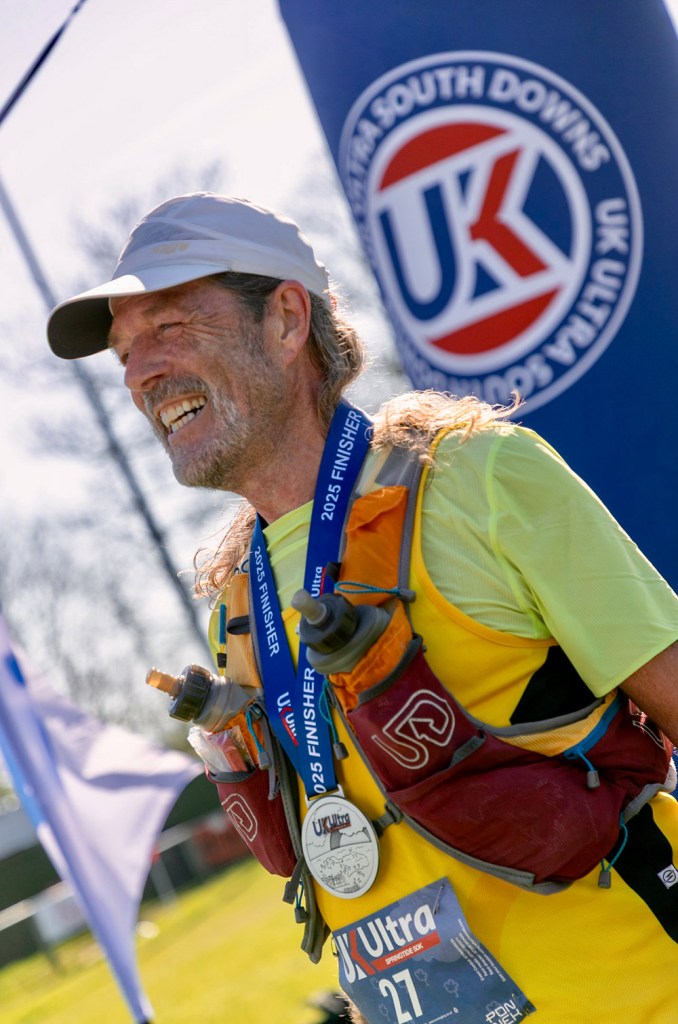
I’m unfulfilled in ultra running. So, I’m running the Dava Way 50k in November to test my reset training methods. If I get below 7 hours for that, I will be happy. Next June I’ll toe the line at the Race to the King 100k, come hell or high water. Between these two races I have sketched in a couple of possibilities. A return to the Springtide 50k next April – it kicked my arse last year, I hope to kick back a bit in 2027. Maybe a 50k UK Ultra Triple Crown? Two more events on top of Springtide In February and May? Easy to say – let’s see what happens.
Thanks for reading this long blog. It will inform my future book, Racing the Reaper Man. Keep running, make peace with your body and ignore the naysayers. My love to you all.
All website content ©Paul Comerford, author, unless otherwise stated. All rights reserved.

