Foreword:
2025 turned into another year of heartbreak. The family have had to endure more painful losses. It has taken a while to feel right in sharing my Racing the Reaper Man experiences, for the last year. I’ve had so many lovely messages of support from people who are encouraged and helped by my own experiences, and getting through them, that I feel the time is right. Over the next few weeks I’ll bring things up to date, and also add to my Distant Harrier blogs. (January 2026)
50k to nowhere – Spring 2025
Life is not linear. It’s multifactorial with plenty of twists, turns and dead ends. As one gets older, there are more complexities, more events, more joys and more sadnesses to deal with. The journey to each of life’s goals is rarely a direct A to B. For me, over the last five years, I’ve gone from A and have stumbled down a hundred unexpected diversions, and have yet to reach B, T, or even Z. That’s why this blog is 8 months late.
I decided to publish this blog, largely written last spring, rather than scrapping it, as it has been my reality. I’m publishing it as I know a lot of people find that my openness encourages them to persevere. I’m publishing, as without it there would be gaps in the narration to that elusive 100k. It’s fine posting pictures of me running carefree, but that is just a snapshot of a life. On social media, we all tend to project a perfect, happy, edited life. If we’re not careful, it can disenfranchise a lot of people, our friends included. There is this tendency to show perfection. This false impression can depress those who think they are failing, in some way. Young and old. Racing the Reaper Man is not just about running. It’s about running as a part of life, and how life is multifaceted.
The one core value I adhere to is that everyday life is enhanced by exercise. For me, that is running, strength work and anything my physio sets out, should I need it. This vehicle, that is our body, our complete self, is the only one we’ll get. It needs looking after, maintaining and providing with the best fuels. I include one’s mind and emotions in this analogy – there is no separation biologically. Looking after oneself can instil resilience to get through hard times, even if you feel as low as it’s possible to feel. With such resilience born of proper care, our body will see us through life in good order. To show you how I’m moving forwards, here is my updated blog, first written in April 2025.
Oldism…
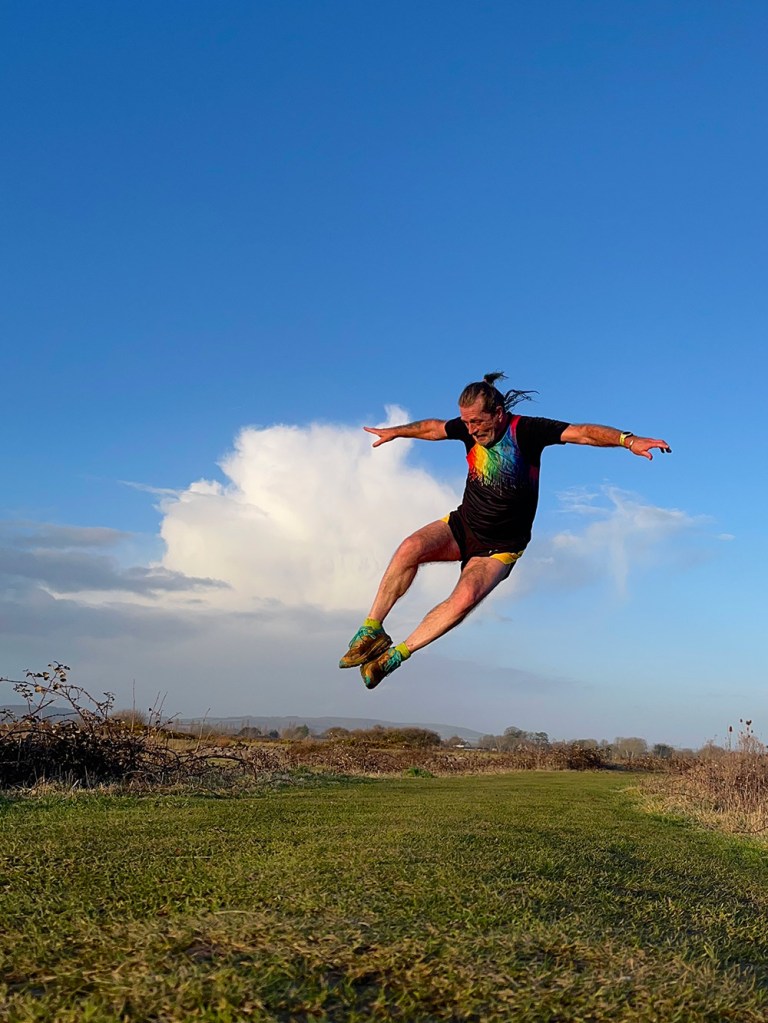
I’m 69. When I started running I was 25 and years of improvement lay ahead. Now, 44 years later, I really am Racing the Reaper Man. I find I’m fighting a rearguard action to keep cynicism and ‘oldism’ at bay…
…I’ll digress a little, to explain my own view of that number, 69. Oldism is my word for those who insist on conforming to the culturally accepted norms of aging. (Different to ageism.) There are lots of oldists about. The ‘act your age’ brigade, both young and old(ist). Oldism is the very practice and practise of criticising, using populist mores and derogatory sleights, to corral mature people into a bias-serving box. Even governments do this. The term ‘elderly’ is a broad brush. I’ve noticed, the worst oldists tend to be older, or prematurely older themselves. Oddly enough ‘gerascophobia’ abounds, too. This is roughly translated as fear of aging – often manifest when such sufferers grab for Botox, a plastic surgeon or a bucket of render to hide their laughter lines. There is phobophobia, too! A phobia about phobias – but that’s just silly.
Well, bollocks to that. I’m 69, not dead. Generally, I’ve looked after my body quite well, and have never been knocked down more times than I’ve got back to my feet. I had a spell of 8 years when I became overweight, ill and miserable. I’d invested in a relationship that suited neither of us. Moving on made more sense and saved my health. My life is precious to me – it’s the only one I’m getting, so I’ll bloody well look after it. No one else can. It doesn’t mean I’m trying to turn back time. Rather, I’m pushing the bounds and using it to my advantage.
The pandemic freed me, strange as it may seem. Working from home cured me of suits, short hair, London, and worrying about what people think. My ‘superiors’ hid whilst I was working 70 hours a week ensuring employees were safe from Covid-19, and only reappeared once there was praise to reap. It took me a while to figure this out. The Civil Service is full of wonderful people, but also steeped in elitist ‘don’t-rock-the-boat’ drivel. I was naïve enough to miss the signs that my integrity and honesty did not sit well. Only resilience saved my life, literally, and I started to fully embrace the things that freed me. Come retirement, I find I like who and where I am.
Don’t give in to the stereotype of ageing. Don’t think your limits are set in stone. Push the boundaries. That’s what the young do, and that’s what we all should do to keep healthy. The advantage of age is having a store of knowledge. If applied to life without bias, one acquires wisdom. Now I’ve found I have to apply everything I know to myself, as I undergo the next few months to big ultramarathons.
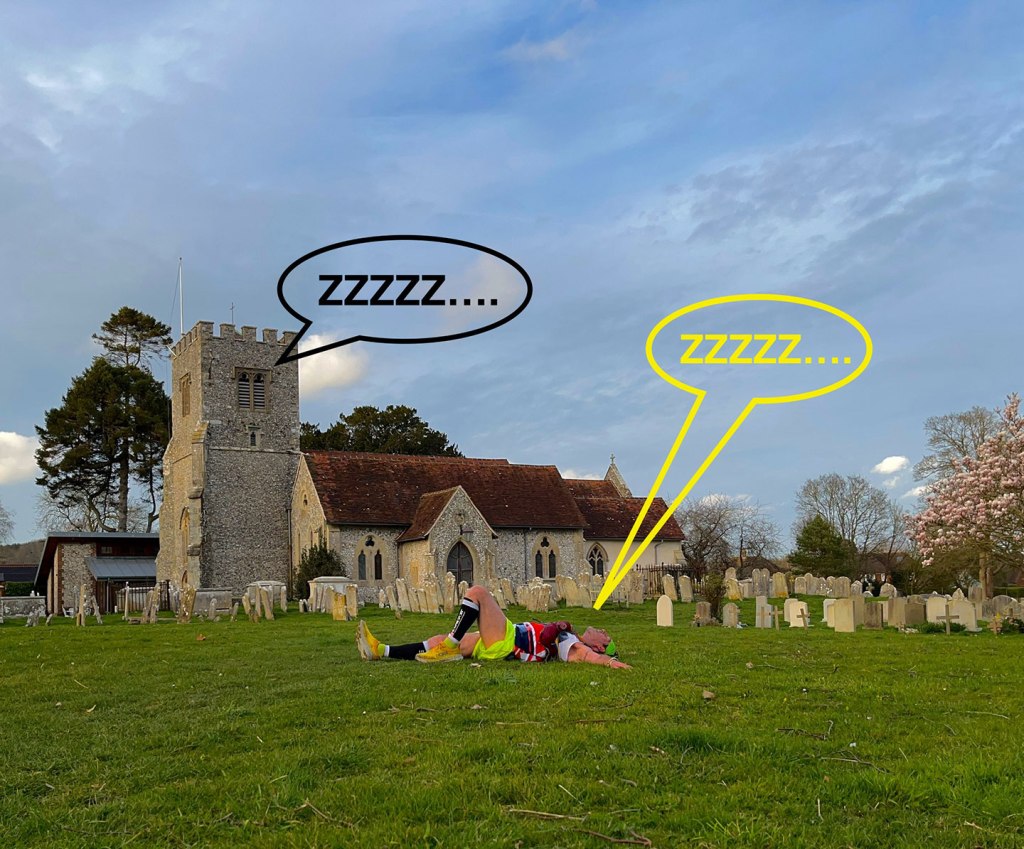
It was as I drifted into my 7th decade in 2016, that I realised I needed a new running challenge. Since the end of 2020, I’ve not missed a day of running. I hit 1800 days at the end of November. This streak started without planning. Each day without a rest became a whim, then a fancy and then a challenge. Now, especially with retirement, it’s more a way of life. Setting the target of running a minimum of a mile a day can be wearisome on cold and windy days, but I’ve never returned from a run feeling worse.
I’ve been running regularly since 1982, aged 25. That means all my best running times were set between my late 20s and early 30s. I can never hope to go faster. Life is like that. I wondered what new benchmarks I could aim for that I’d never previously attained. It took a while, but then my wife bought me Dean Karnazes’ Ultramarathon Man. Of course! I could run further than I’d ever done before. I could try ultramarathons! I could target new distances my younger self had never aspired to. The distances alone would be new records. Since 2021, I have run above the marathon distance several times, including organised 50ks, and set a new distance personal best of 32 miles. Then, as I’ve written before, I gave in to a niggling injury. As it turned out, it was an old injury I’d never really allowed to heal. That was in 2022. Finally, at the very turn of 2025, I could run injury free. The new year gave me a new start.
Making it up as I go along…
My long overdue debut at 100k was scheduled for June 2025, 49k further than I’d run before. My training for this started in January, with a gradual increase in monthly mileage and long runs. All this is standard fare, when it comes to ultramarathon training. The non-standard part is my age. Or rather ultramarathon advice for runners of my age. I’ve discovered there is very little for veteran ultra-runners of V60+. In fact, little to guide anyone beyond the V50 category. Seriously! I’ve found short articles about older runners doing exceptional things, but not how to get there for those around the 70 mark. There are lots of videos about ultras. Unbreakable is one of the best. But, again, it’s all about the younger, elite level competitors. I needed to construct my own programme.
In February 2025, my training schedule was sketched out in my Running Log, right up until my 100k. It was my own V68 plan, the age I’d be when I ran it. The schedule looked alright. Lowish total mileage, with well-spaced harder workouts. My unsolved problem, was knowing how to cover lots of ground without running out of fuel or getting injured once more. I decided to go by feel, so trained on a knife edge between success and collapse, to get from base fitness to 100k fitness in 5 months. It was unsettling. For the first time in my 43 years of running, I’d entered unknown territory. I started to overthink everything. My mind was buffering. I cast around for some extra advice.
My dear American friend David, who is of mature years too, said… ‘the best advice I ever received was from another old guy runner who told me, “Most training plans are designed for younger runners and that ain’t you! You need to have plenty of easy days or you’ll hurt yourself.”’ Another friend, Nicky, who has completed big ultras, added that I should use the run-walk method… “nice and steady, lots of snacks, picnic on the move.” She, too, has helped me see that adjusting my mindset and approach was a necessity not a defeat, but a natural progression. An embracing of the new V60+ me.
I’ve sifted data from my running logs, and applied the advice from David, Nicky and others I have chatted to. By doing this I’ve tweaked the schedule of my 100k training through the Ides of March. I think I have the model for someone in their late 60s to complete 100k. Now, I just need to follow it, use some common sense and see if I can peak at the right time.
The main issue was, I still had a lot to learn about something called recovery… and I’d stuck a 50k ‘training run’ into my plans for April 6th. Was this wise? It meant getting ultra-fit in just 3 months.
100k training through March
The 13 and two 14 milers of February were monstrous, so early in my programme. I was treading that fine line between fitness and injury. I had condensed my early training into 11 weeks, plonking the 50k at the end of the phase. As the ultra was a hilly trail run, I’d made my long runs very hilly. In March I ran another such 14 miler, then upped my weekly core strength sessions. By the Ides of March I realised I was not recovering from either type of training. My logical mind knows I need 16 weeks plus a taper for any big race.
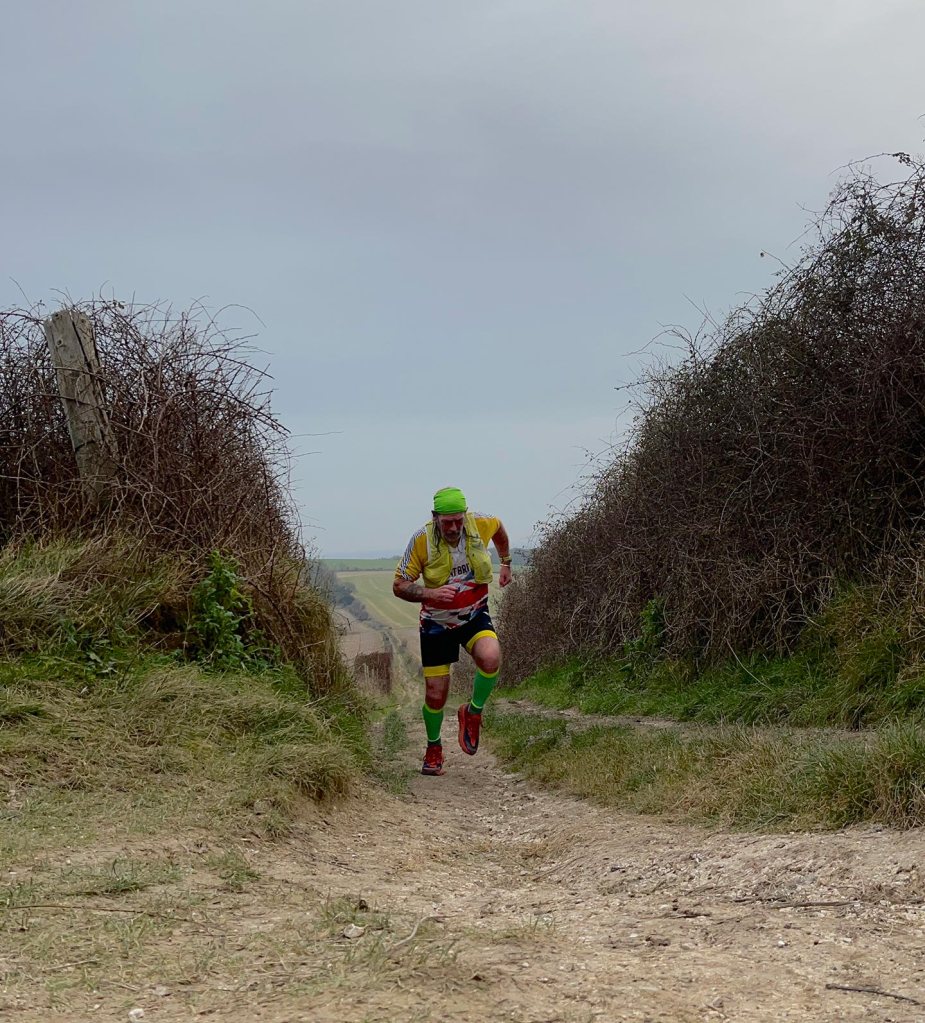
With such a short buildup I could not get near a 40 mile week, and started to see being 68, at the time, had changed things. A look at my training log showed I was naturally starting to leave bigger gaps between long runs, so nature was making me recover, even if my worries about losing fitness continued, based on my younger self’s achievements. I had to be a bit radical, and take a gamble based on years of running wisdom, and a hunch.
I trimmed a planned trail 16 miler from my plans, and slotted in an 18 mile road run to see if I could set an manageable pace somewhere near 11:00 – 11:15 a mile. I ran on a flat 1⅓ mile lap near my home, my Passepartout cycling next to me. I averaged 10:59 pace, but my legs were still heavy. Two days later I did another tough core session, focussing on strengthening my quads. I was still very tired. A 14 and 18 miler in March was due to be complimented by a 22 miler, two weeks before the 50k. The only problem was, my legs were shot! I needed an extra week of rest, keeping my streak going with one mile minimum runs.
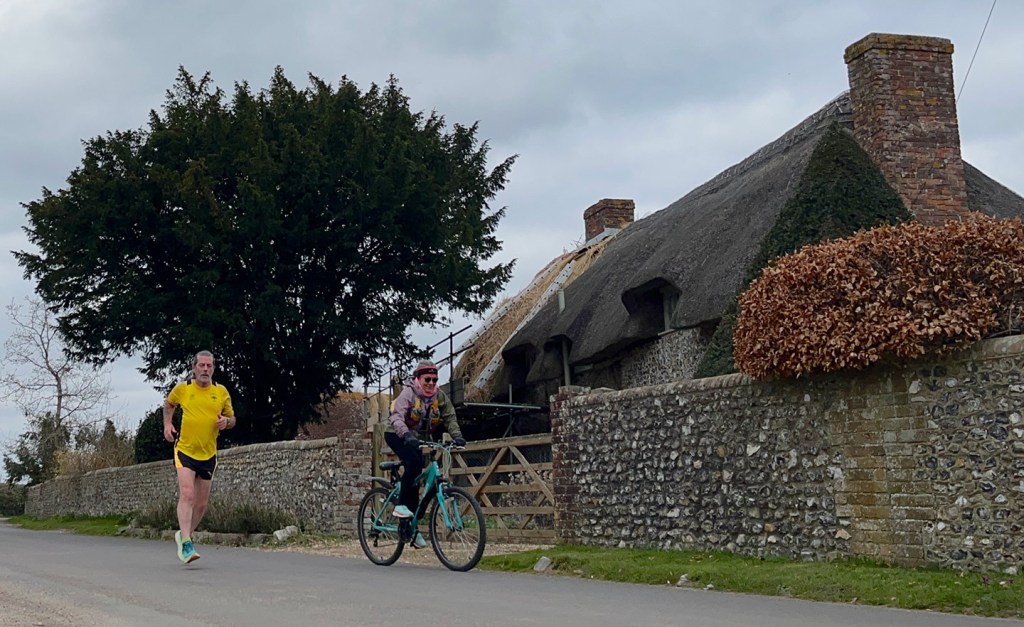
I stared at my schedule and sloughed off the last vestiges of my younger self’s ego, then made a new error, born of a gamble. I thought deep and hard. The 50k was less than 2 weeks away. What if I slotted the 22 miler into the weekend before the ultra? Would my body recover in time? Hmmm… also, the 50k was not supposed to be a race, but rather a training run. What if I ran a tough 22, then did very little for the intervening seven full days? In my mind it was possible I could experience a rebound effect and reach the start line in better condition. Does that make any sense? The only advantage I have over logic, is knowing my body. I took the gamble. I ran a very hard 22 mile trail and hill run the weekend before the race. Once done, it was too late to backtrack. I got home very weary. Could I recover?
Springtide 50k… Did I just get my arse kicked?
Another invisible factor had also gone unnoticed. My Heart Hate Variability (HRV). It is one of those readings on the dreaded Garmin App, that I find consistent with how I feel. It is the variation in the time interval between heartbeats. Hindsight is wonderful, but it showed that I’d started the 22-miler fatigued, and since, instead of recovering, my HRV had dropped steeply, from normal to ‘low’. In fact, it was at its lowest ever when I woke up to go to Arundel. My legs were not right… not recovered, is a better way of describing them.
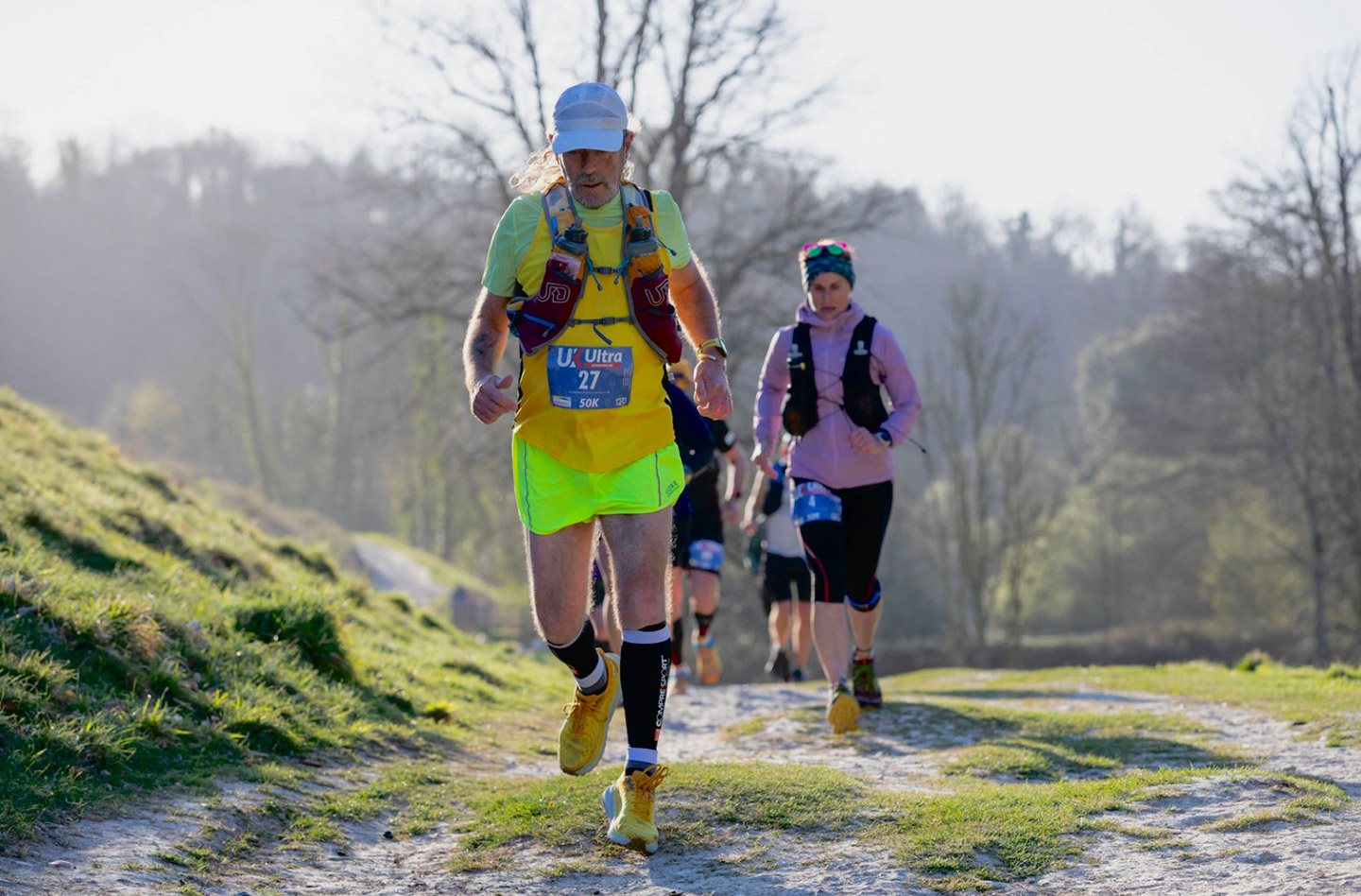
The drive from our house to Arundel is pretty. I know the back roads, so took us through leafy lanes as the cold morning advanced. My goodness it was chilly. Yet, up above, the blue sky was unbroken – later it would be hot. By 07:30 I was ready to start. Lightweight Hoka T-shirt, club vest, yellow Gore shorts. Hoka ATR7 shoes, Injinji socks, and calf sleeves. I also wore a white, lightweight Inov8 cap – in hot weather, I find this invaluable.
As the countdown to the start hit two minutes, I took stock. There were 31½ miles in front of me. My legs were weary. Yet, I felt calm and inside the flutter of impending release. I needed this run to break through my wall of doubts. Was I ready for this? No, not as a race. But this was always a test to see where I was, to hone my nutrition plan, practise pace and running-as-I-feel. Right then, as the final twenty seconds started, I knew I’d finish.
“PAAARP!” I set off at the back of the field. In the first mile I had to weave my way between runners, along the flat Mill Road, then onto the trails at Swanbourne Lake. 11:18 for the first mile was easy enough, but immediately the hard climbs started. My left Achilles decided to ache, and the sun burned off the mist. Ahead, the train of runners had already started to walk the steep climb, so I joined in, as the going was tough and a 15:18 mile reflected this. The drop down into the Amberley Gap (the low valley through which the Arun River flows) was a welcome relief, and I found myself with a small pack of runners nipping down at 10:00 pace.
At this point the big climbs started, and my legs were already tired. From the Amberley Gap, up to the first aid station, walking more frequent than running, though I was covering the ground well enough. Water melon, banana and topping up my flasks – then down for a couple miles at 11:30 pace on the rough trails. The sun was blazing from a clear sky, and the east winds were of no help as I was in a sheltered valley. All along the route I talked to many fellow runners, every one was lovely, and each said the same – we had to respect this route and the weather. Quite. I wrote in my Running Log, ‘I already knew this race was going to kick my arse.’
10 miles went by in around 2:05:00, but the huge climb through Eartham Wood, up onto the top of Bignor Hill brought me fully into reality – I had not tapered or rested enough, I had not been training long enough and it was going to be a hard day. The next 10 miles were brutal for me. The second aid station saw me stop just to top up my flasks and swallow more water melon and banana, and I managed an ultra-shuffle along the rolling hills before I ran back down into the Amberley Gap at a good rate. Here I knew the third aid station was the last for the 8 hardest miles, so I made sure I hydrated and filled my flasks to the very top. Over the bridges spanning the railway and Arun River, my pace was still a respectable 12:20 average. Until, that is, we had to negotiate the monster 2-mile climb from Amberley up onto the top of Rackham Hill on the South Downs Way.
The climb was relentless and no one I could see even attempted to run. I’d clicked into survival mode, but was not distressed. My hamstrings sang as I breasted the hill. I’d just about found my place in the field, between 97th and 103rd and there I stayed. I was in good company of a Scottish chap and a tutu wearing runner called Gareth. Beyond 20 miles I was pretty much running alone. Any hill found me race-walking. Along the tops and downhills I ran as I could. The sun was relentless for April, but the cooling wind, now in my face, stopped any major issues. I don’t mind the heat.
During this final third I’d found peace. All the anxiety had gone and I’d stopped worrying about my tired thighs. I’d gambled with recovery and lost, but I was gaining a hell of a training run and learning on the hoof. The sun was bright and hot, but the headwind kept me cool and my hat kept my head from baking. I ran alone for a couple miles as my younger companions forged ahead, their ultra-shuffle being quicker than mine. I had to rely on my own wits to watch for direction arrows, but trotted in to the final aid station at Tolmare Farm without incident. I’d caught a few runners here, but they left as I replenished my flasks and ate more melon and banana.
From here, beyond 24 miles, the course turned west towards home. The breeze died and I was dropping from the heights of the South Downs Way. Yet, the ‘mostly downhill’ turned out to be undulating. I was alone again. Those ahead would stay ahead, and I could see no one behind. There was quite a sting in the tail. At Michelgrove was a very steep climb up into Angmering Park. My tired thighs were numb by the top, so I resigned myself to finishing well outside 7½ hours. There was no point in pushing harder. The 100k was more important. Through the trees – 29 miles, 30 miles, then down to the level ground of the Arun River valley. Over the railway and I turned to shuffle along the riverbank. At 31 miles I looked back – a young couple were jogging, trying to catch me! They must have made up half a mile on me since the aid station! I turned and fled! Well, broke into a slow run at about 11:00 mile pace. I learnt later they stopped and walked once they saw me start running faster. They were more tired than me, but I had, at least, dragged them along to a faster time. I’m an easy target in my yellow kit!
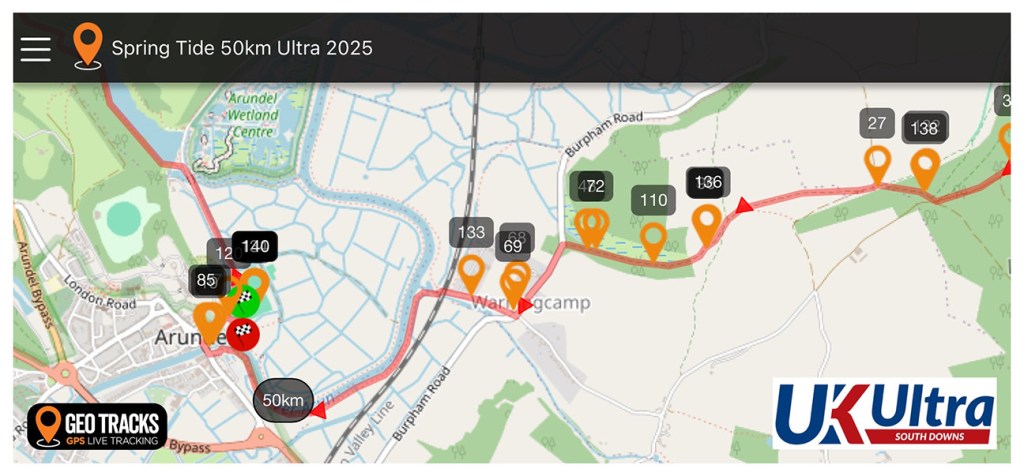
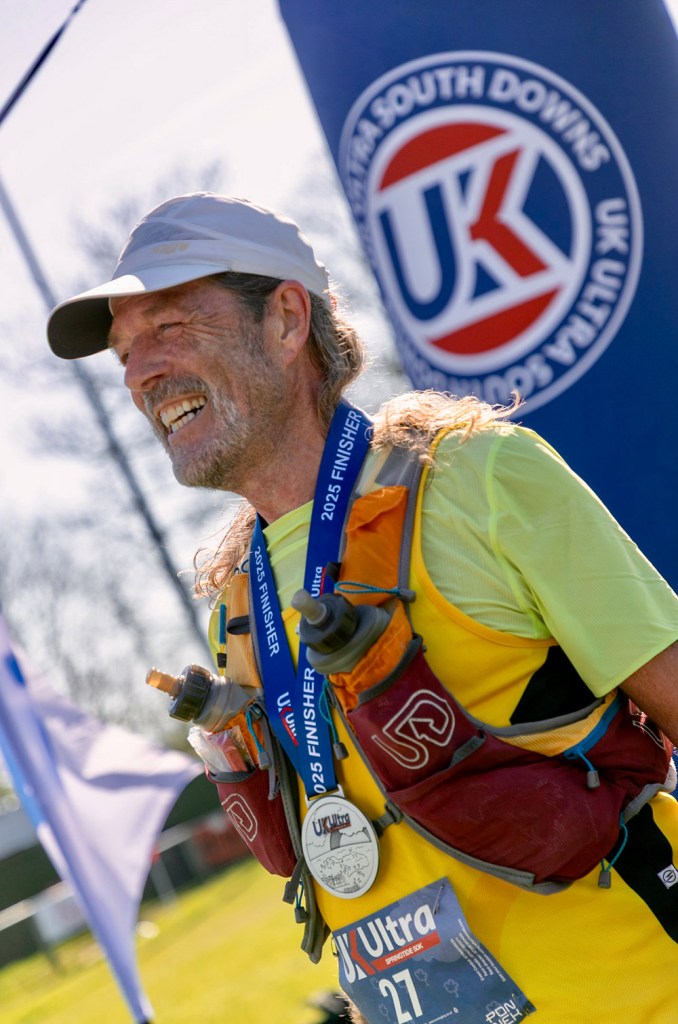
Through the houses, out onto the Arundel road bridge and I ran to the finish like a scalded cat. Announced and finished. 7:40:56. Bloody hell! I felt great! Not overly tired, well hydrated, and only slowed by my lack of recovery from March’s training load. A huge grin and a hug for my Passepartout.
I had got my arse kicked, but had also gained a great deal of knowledge. Now I was ready to recover and complete the last phase of 100k training… but life can change in the blink of an eye. And it did. 2025 became as tough a year as 2024.
My next post will explain all.
All website content ©Paul Comerford, author, unless otherwise stated. All rights reserved.
 Paul Comerford