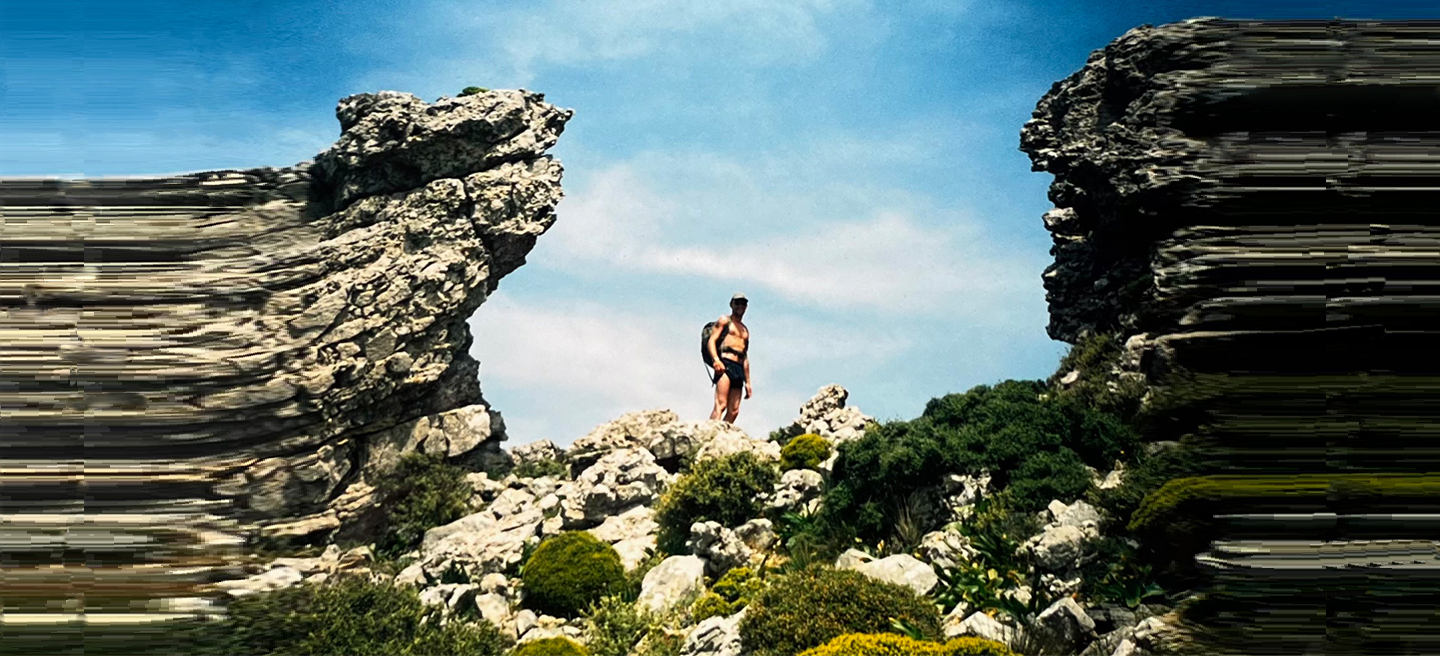
Listen. You cannot waste time. You can only waste life. Time will get on fine without you. This life is the only one we will get, so it is precious. Finding your way through that life should be a wonderful experience, but we often fail to remember that. Some get by with the tick-tock of routine and the comfort that gives. Others tie their raison d’être to authoritative ideology – political, religious, conspiracy theories, etc. Beyond the realm of relative comfort in our ‘civilised’ society, others struggle to stay alive, thinking only about where the next meal may come from. In all these examples, only the last one is imposed. Only in the last one is life stolen by circumstance.
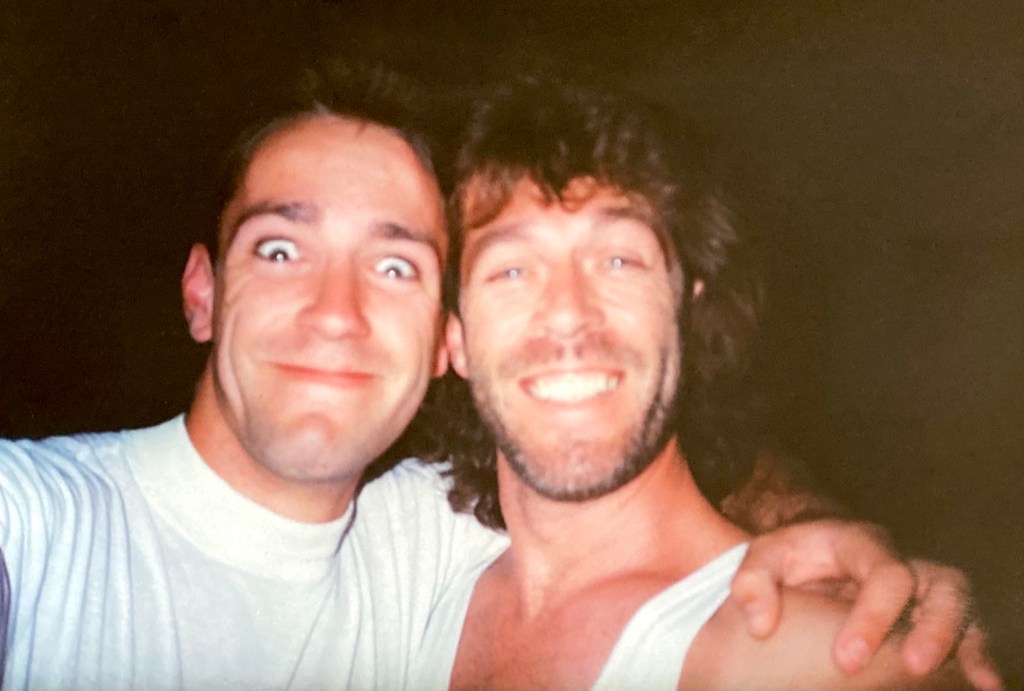
Where each of us live is an accident of birth. And, being born as an individual, the unique person we are, is pretty special. Consider this: out of some billion sperm cells, just one gets to fertilise the waiting egg. If your sperm cell, the one who makes you you, was lazy, you would not be here. How wonderful is that? All-in-all, we Humans are a mixed bunch: here by the slim chance of probability; and able to find a way through life, if we are lucky, in a way of our choosing. Oddly enough, the only things that stops that happening seems to be a natural disaster, illness, or our choice of authoritative ideology, two unknowns and a known, whether we’re in a developing country or lucky enough to be born into a free democracy.
Democracy is from Greek: dēmokratía, dēmos ‘people’ and kratos ‘rule’ (δημοκρατία). To be successful it is based upon discussion and debate – certainly not arguing and proclaiming. Discussion is a way to reach a thoughtful conclusion. Discussion is ‘group thinking’ to reach a sound conclusion, giving room for more reflection and thought. An argument is the opposite. An argument in this context is the one where diverging views are exchanged, typically angrily and heated. An argument is inevitably opinion based, where minds have shut off and emotions rule the day. Opinions are based on the less thoughtful processes. If someone has an opinion only, I reserve the right to dismiss it.
We humans have bestowed upon our species the scientific name Homo sapiens: a Linnaean appellation meaning ‘wise man’ or ‘knowledgeable man’. This is a nice name for us to give ourselves. I’m of the opinion that these two adjectives, used to define the Latin word sapiens, are accurate enough. There was a time I used to consider ‘thinking man’ to be better suited, but now I’m not so sure. You see, thinking is a process that should furnish a defined end point, a sound conclusion. That is what being wise comes down to. As I’ve aged, I see that wisdom comes later in life. To be wise, thinking must reach a point where one arrives at that sound conclusion, not just an opinion. An opinion occurs when the thought process is cut short to suit a bias. It seems to me, basing a life on completing the thinking process would solve many, many problems. I have thus stepped into the wonderful world of philosophy. If we accumulate enough knowledge and wisdom, throw personal bias to the wind and follow through with thinking, we all become philosophers, especially in our later years.
The word philosophy comes two Ancient Greek words: philos (φίλος), which can be used for ‘friend’ or ‘love’; and sophia (σοφία) which pretty much means ‘wisdom’. [I stand to be corrected by any of my wonderful Greek friends, but I think I’m pretty close to the etymology.] I rather like the thought that, as an older philosopher, I’m a friend, or even lover of wisdom. The only problem with this ability to become a philosopher, to becoming one’s own Socrátis, is the fact that it really does take a long time to accumulate enough knowledge to get there. For a primate as unpredictable, but clever, as Homo sapiens, that has produced something both fantastic and frightening.
Between the time of proscribed learning (childhood) and wisdom (maturity), is that longer, wobbly bit in between – applied knowledge (adulthood). There was a time, not so long ago, when those of mature years added to the childhood years a degree of sanity, of sound advice. Children listened to sound advice from wise old grandparents. Yet society has accelerated to the point where there is a blurred line between each stage of life. With the advent of the marvellous tools of instant news, social media and, believe it or not, fast food, we have tended to plug into these sections of our modern culture to the detriment of critical thinking. The bulk of humanity seem to be bent over a smartphone, which does all the thinking necessary, and also orders fast food very quickly.
I will now make a series of statements that I hope get my readers thinking:
• I have never heard a modern politician proclaim anything that has had critical thinking applied.
• I have never heard any religious howler state anything that would hold up to critical analysis.
• I have yet to see any conspiracy theorist use critical thinking.
And,
• I very often hear those wise heads who announce good, solid information based on profound critical thinking, shouted down by buffoons who seem to have heads full of concrete.
The meaning of our self-applied Linnaean identification doesn’t look quite so accurate in the face of this. Oh, and yes, I have thought this essay through to an endpoint that I never really saw coming, using critical thinking.
My favourite old Greek, Socrátis, was the pioneer and master of critical analysis. In a nutshell, he encouraged us to question everything. His proclamation that he considered himself wise, as he was wise enough to know he knew nothing, rounds it off neatly. Taken as read this may seem clumsy, but there is great beauty in it. It is a gentle warning to us all not to believe we have every answer. To never believe we are so bloody clever, that we can stop learning. He saw that whenever a Homo sapiens reaches that unwise position, it is the point this clever primate starts to shout down those who are wiser. It is also the point where every bit of wisdom gained is thrown to the wind of authoritarian bullying.
I believe that one can live a life with only opinion as a guide, deluded as it is. It is when such a person imposes that bleak point-of-view upon others that it becomes very dangerous and incredibly infectious. It becomes addictive and displaces thought. It zooms from every smart device into brains that take the easy option and believe, without thought, every little piece of bollocks the bamboozlers throw out there. The best way to cover the bamboozle is to quote that late, great critical thinker Carl Sagan, in his The Demon-Haunted World: Science as a Candle in the Dark:
“One of the saddest lessons of history is this: If we’ve been bamboozled long enough, we tend to reject any evidence of the bamboozle. We’re no longer interested in finding out the truth. The bamboozle has captured us. It’s simply too painful to acknowledge, even to ourselves, that we’ve been taken. Once you give a charlatan power over you, you almost never get it back.”
This brings us to the final part of my own philosophising and will lead on to the title of my essay. We like to think we have choice. Well, we do. Every one of us has choice. The only things that can remove choice are the bamboozlers (ideological, political, religious authoritarians – this often includes parents, unfortunately) and the desire to ignore the obvious. We all do that at some point in our lives. I once pronounced to my Passepartout that philosophy was outweighed by science and thus irrelevant! How arrogant was that? For, without philosophical thought, a scientist cannot keep an open mind. Scientific theory is based on the tenet of being disprovable. If you jump out a tenth floor window and go up, you can disprove the theory of gravity – but don’t try it, as scientific theories are not based upon opinion or speculation. Scientific theory is based upon having the strongest framework to explain a fact: fact – you fall if you jump out of a tenth floor window, this is explained by the theory set out in Newton’s law of universal gravitation; fact – all life evolves (one can see it happen), this is explained most beautifully by Darwin’s theory of Natural Selection. I chose the strongest and most factual examples that have never had any evidence presented to disprove them (bamboozlers’ inflicted baseless opinion, apart).
So, we have choice, unless it is taken away from us by nefarious people or imposed situations. It is hard work this thinking stuff. It takes time. To make a choice should take time. It should be considered. It’s not easy. One may be in love with a bamboozler, and that adoration can skew a choice. One ends up with the wrong partner. Then one has the choice of divorce, I suppose. One may choose a political persuasion, yet be endlessly disappointed by the outcome. (A word from the wise, here. No matter who you vote for, you’ll always be disappointed and end up arguing with other disappointed people who voted for another ideologist, all whilst the incumbent bamboozlers talk bollocks and make choices on your behalf. Choice is a funny old thing.)

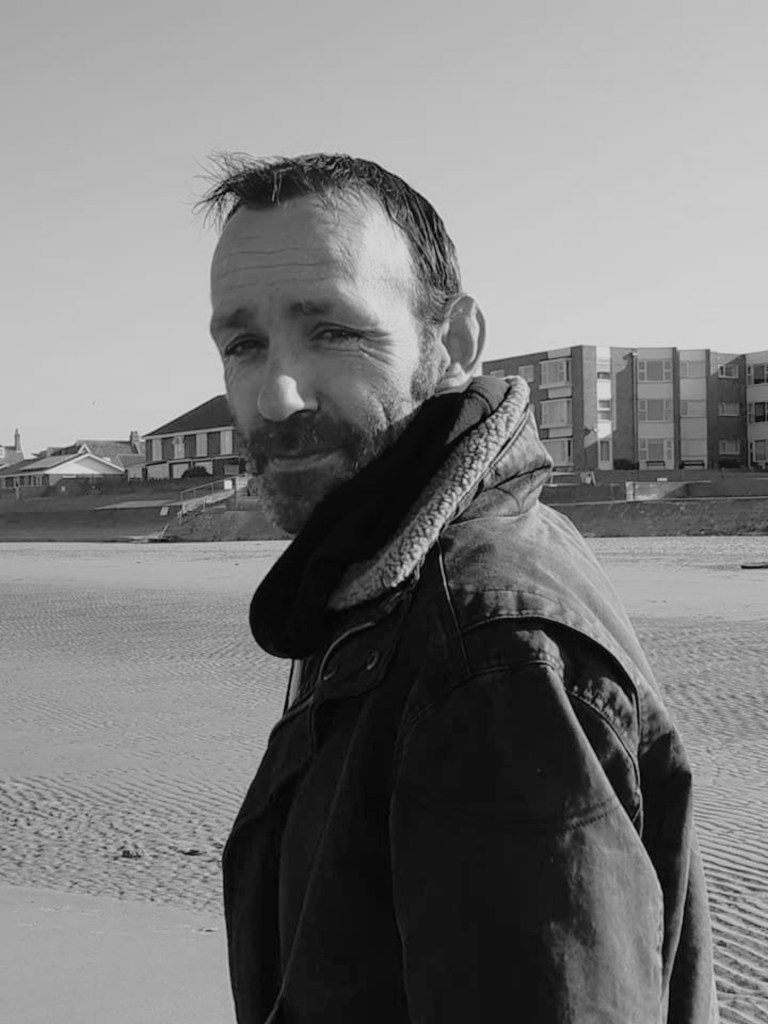
My son died on Monday 4th March 2024. No matter how much I think, or how much I philosophise, some things are too painful to bear. My wisdom, my knowledge and my input had no effect on changing things. Years of advice, of presenting choices and finally, just hoping, came to nothing. He’s gone and there is nothing I can do. So, I’ve found another unseen problem with making a choice: sometimes a choice can take you to a place where further options to choose, disappear. This is what happened to Glenn. The disease of alcoholism dragged him into the abyss. I loved him all the way, but it came to nought. We can, however, give him his dignity back. And we will.
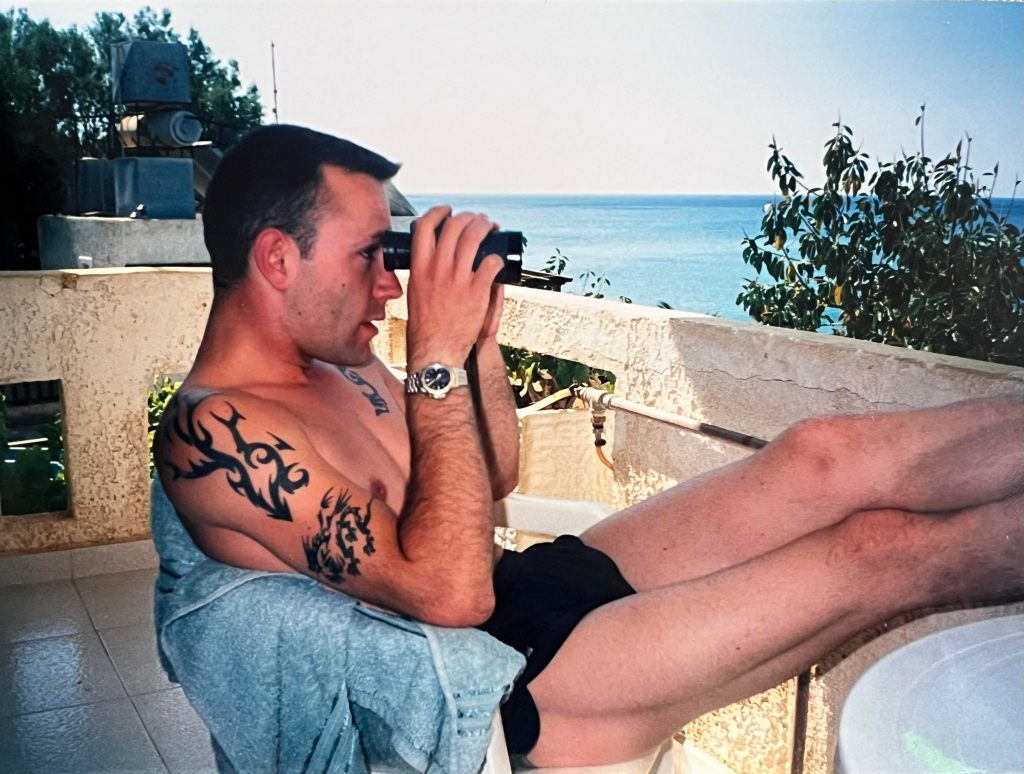
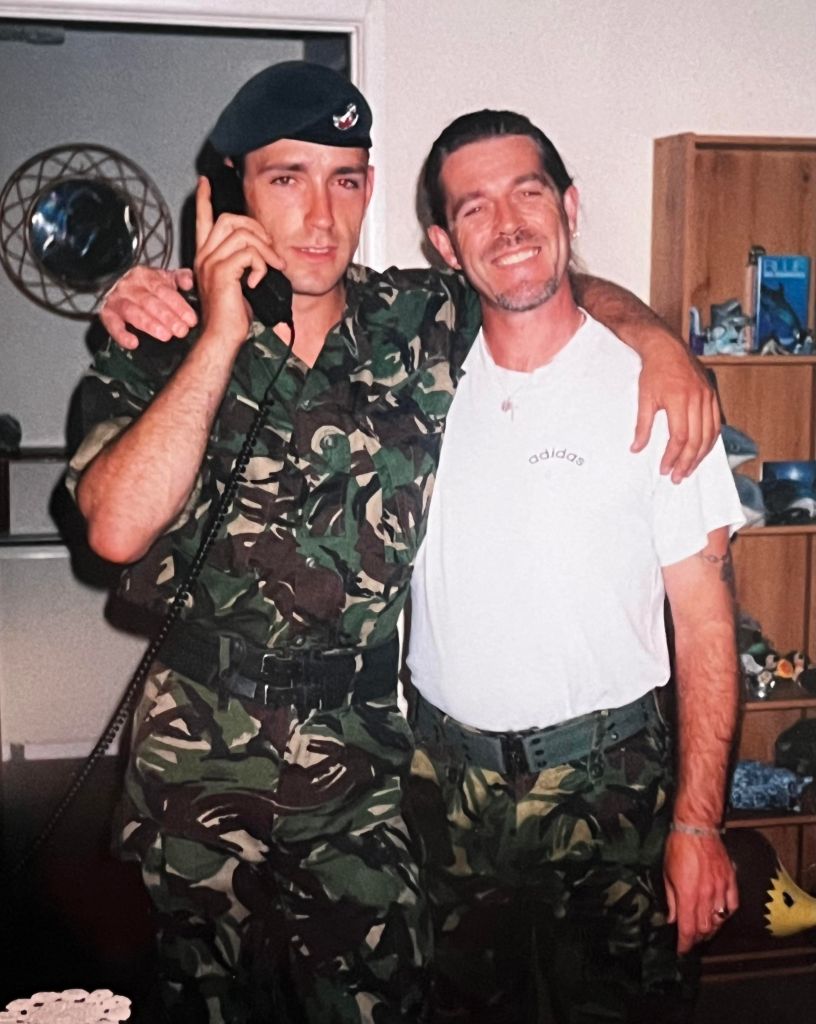
Glenn was 47 years old, and a twin. He was a son, a brother and a father. He was brilliant as a mechanic. He was brilliant at fishing. He had been a fine soldier. At birth, he and his twin brother arrived 2 months early, weighing but 3lbs each (1.37kg). They fought the odds and survived. I was just 20 and walked around in a dream. My young wife and I never quite understood the work ahead, young things that we were, just children ourselves. The boys grew rapidly and became fine young men. Glenn was the pusher of boundaries, the dreamer, the trier of things bold and things daft. He could be hilarious and infuriating. Through all this that addiction crept up, that Nemesis that has no respect for class, sex, religion or nationality. And so it goes. We loved him. He will rest with my father, his grandfather, in a place where dignity will be kept.
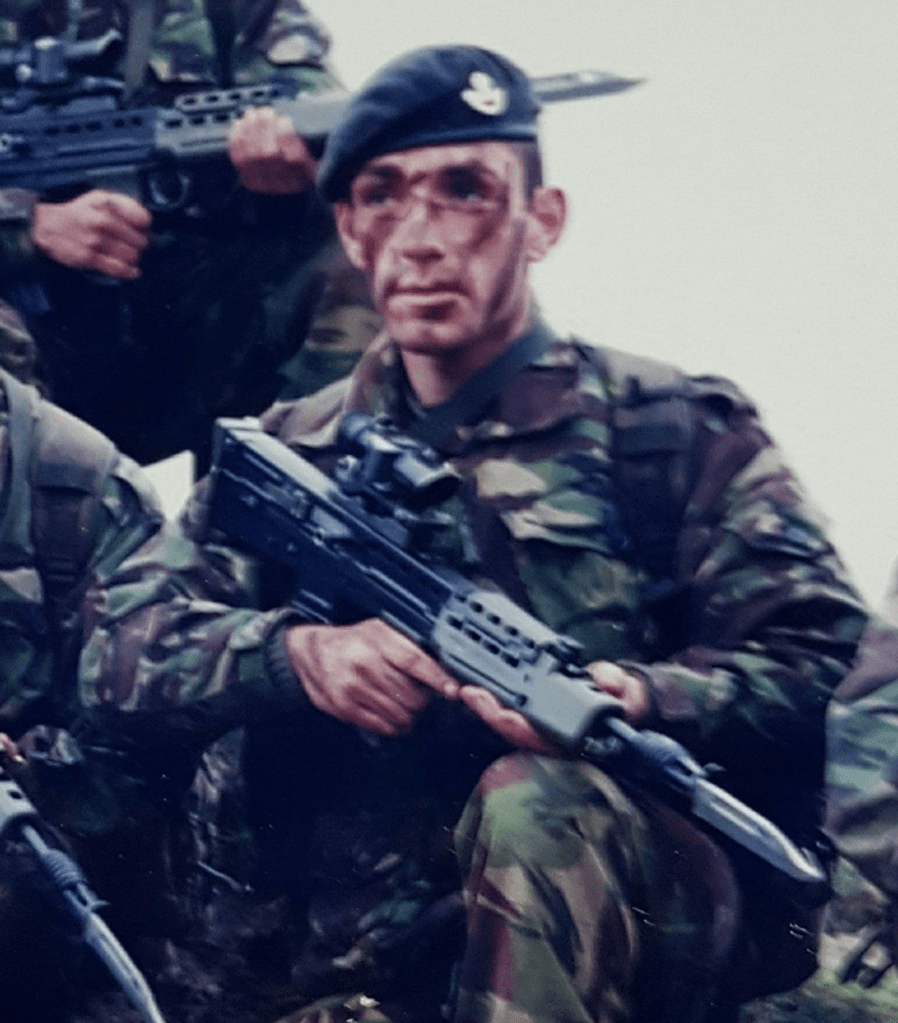
So, I live in hope that we all start to think a bit more. Let’s be kind and take time to advise those we love. Maybe it’s time for all of us to ignore the wailing sound of those who proclaim via authority, without critical thinking. You see, I have found that being nice covers every eventuality. A nicer, greener, healthy world would be a fabulous thing to leave the next generations of Homo sapiens. I say ‘Goodbye my Son.” He will never be forgotten, because he was loved. That’s the one gift we can all give him, and we shall.
In loving memory
of
Glenn Comerford
A son, brother & father
3rd February 1977
to
4th March 2024
Aged 47
You are remembered,
because you are loved.
We miss you
Oh My Son

Written 15-05-21 to 04-03-24

Oh my son!
My boy, my child,
What am I to do?
You say “Nothing”,
And we hug,
And weep and love,
And you are my little boy again.
Then, back comes the dark,
And I am lost as my heart breaks,
And I’m helpless,
And I love you so.

I don’t want to go,
Don’t want you to go,
Want time to reverse,
Want history to change,
But Want, and What If,
Are just wasted dreams.

I missed you already,
When this last journey started.
Oh my son!
My boy, my child,
What am I to do?
You said “Nothing.”

Our time has gone,
So fast, a blink,
A never ending second,
A never ending agony,
Oh my son!
My boy, my child,
I miss you so,
Even your “Nothing” has gone,
Only love is left.
All website content ©Paul Comerford, author, unless otherwise stated. All rights reserved.
 Paul Comerford